Showing posts with label Bible quotes. Show all posts

October 19, 2021

Charity, love and a prenup cover a multitude of sins...


THE FAMOUS BIBLICAL QUOTE:

“And above all things have fervent charity among yourselves: for charity shall cover the multitude of sins.”  
      
Saint Peter (c. 1 BC-c. 67 AD)
       Galilean-born Apostle of Jesus and early Christian leader
       His famous words in
I Peter 4:8, as translated in the King James Bible. Most later version of the Bible use the word love in place of charity.
       Chapter 4, Verse 8 of the
“First Epistle of Peter” (usually referred to as I Peter 4:8) is the origin of the sayings “charity covers a multitude of sins” and “love covers a multitude of sins.” These reflect two different translations of a word originally written in Greek by Peter. Although most familiar Bible quotes are from the King James version, “love covers a multitude of sins” has become the more commonly heard version.
       Peter actually used the Greek word agape for the thing that covers a multitude of sins. In the early Catholic Church’s Vulgate Bible and in the King James Version, agape was translated as charity. In later versions, it was translated as love. But in early Christian theology it didn’t quite mean what we now think of when we use either of those words. Agape refers to a more profound concept that can’t easily be translated into a single English word. It means a feeling of charitable compassion, empathy and non-romantic love toward other people, like the love God and Jesus Christ are said to have for mankind; a higher love that can look past and forgive — and thus “cover” and accept — other people’s faults and transgressions. 
       The famed Bible quote was not intended to mean that if someone gives enough alms to the poor or donates enough money to charities it will atone for or “cover up” their sins and let them get past St. Peter into the Pearly Gates of Heaven. Nonetheless, in common use, variations of the saying “charity covers a multitude of sins” are often used to suggest that doing or having a certain thing will hide or excuse something else.


THE #TRUMPBIBLE VERSION:

“Love covers a multitude of sins. Sure. But you’d be nuts not to get a prenup. I mean, c’mon. #TrumpBible.” 
       Eric Metaxas
       Pastor, author and radio show host
       One of Metaxas's suggested additions to the funny faux Donald Trump quotes featured on the #TrumpBible Twitter page, which mocks Trump’s claim to be a Christian (and Trump in general). Illustration by Jordan Awan.


MOTHER TERESA’S POIGNANT VERSION:

“The conditions under which the leper families live are terrible...Sometimes the pain is so great that I feel as if everything will break. The smile is a big cloak which covers a multitude of pains.”
      
Mother Teresa (1910-1997)
       Albanian-born Catholic nun known for her humanitarian efforts in India
      
In a letter quoted in the book Mother Teresa: Come Be My Light: the Private Writings of the Saint of Calcutta (2007), edited by Brian Kolodiejchuk


OSCAR WILDE’S SOCIALIST VARIATION:

“The proper aim is to try and reconstruct society on such a basis that poverty will be impossible... Charity creates a multitude of sins. There is also this to be said. It is immoral to use private property in order to alleviate the horrible evils that result from the institution of private property. It is both immoral and unfair.”
      
Oscar Wilde (1854-1900)
       Irish playwright, poet, social critic and wit
       In his essay
“The Soul of Man Under Socialism” (1891)


CARL SAGAN’S OBSERVATION:

“The word ‘god’ is used to cover a vast multitude of mutually exclusive ideas. And the distinctions are, I believe in some cases, intentionally fuzzed so that no one will be offended that people are not talking about their god.”
      
Carl Sagan (1934-1996)
       American astronomer, astrophysicist, cosmologist and author 
       Remark in a lecture included in the book
The Varieties of Scientific Experience: A Personal View of the Search for God (2007)


CAPTAIN KIRK’S QUIP:

“That helmet covers a multitude of sins.”
      
Captain James T. Kirk (actor William Shatner) 
       Kirk makes this joking remark
to Spock (Leonard Nimoy) in the Star Trek episode “Patterns of Force” (Season 2, Episode 21). He’s referring to the helmet Spock puts on during their visit to a planet run by a Nazi-inspired government. The helmet covers Spock’s pointed Vulcan ears, thus helping to hide the fact that he is an alien.

*     *     *     *     *     *     *     *     *     *   

Comments? Corrections? Questions? Email me or post them on my Famous Quotations Facebook page.

Related reading and viewing…

April 12, 2021

“None so blind as those that will not see.”


THE BIBLE-RELATED QUOTE THAT’S NOT IN THE BIBLE:
“None so blind as those that will not see.”
      
Matthew Henry (1662-1714)
       English Presbyterian minister and writer
       A saying
popularized by Henry’s use in his Commentary on the Whole Bible (1708)
       Contrary to common belief, this is not a quote from the Bible. It’s
a proverbial English saying with no clear origin. Matthew Henry helped popularize it by using it several times in his widely-read book of explanatory comments about the Bible. The saying was probably inspired by Bible verses, possibly Matthew 13:13 (“Therefore I speak to them in parables: because they seeing see not…”) or Jeremiah 5:21 (“Hear now this, O foolish people, and without understanding; which have eyes, and see not…”).


THE LAME EXCUSE VARIATION: “There are none so lame as those who will not walk.”
      
Sir James Marchant (1867-1956)
       British philanthropist and author
       In the book If I Had Only One Sermon to Preach (1928)


THE TRUE BELIEVER PRINCIPLE:

“There are none so positive as those who are but half right.”
      
William McDonnell (1814-1900)
       Canadian writer
       In his novel Family Creeds (1879)


SPURGEON’S VERSION:
       

“There are none so tender as those who have been skinned themselves.” 
      
Rev. Charles Haddon Spurgeon (1834-1892)
       British Baptist preacher
       From a sermon included in his book Sermons: Volume 6 (1859)


THE UNWORTHY WISH LIST VERSION:

“There are none so bitterly disappointed as those who have got what they wanted, because human nature is so sadly prone to want such things as are unworthy.”
       Ellen Thorneycroft Fowler
(1860-1929)
       British poet and novelist
       In her novel Place and Power (1903)


THE IRRITATING BLOWHARDS PRINCIPLE:

“None so empty as those who are full of themselves.”
      
Benjamin Whichcote (1609–1683)
       British Puritan divine and scholar
       Quoted
in the book Moral and Religious Aphorisms Collected from the Manuscript Papers of the Reverend and Learned Doctor Whichcote (1753)


THE IRRITATING CRITICS PRINCIPLE:


“There’s none so bland as can’t see.”
       Editorial comment in
a 1994 issue of the Theatre Record
       Regarding a critic’s negative review of an avant-garde adaptation of Shakespeare’s Richard III

*     *     *     *     *     *     *     *     *     *

Comments? Corrections? Questions? Email me or post them on my Famous Quotations Facebook page.


   '      


April 19, 2018

“The wages of sin”


Saint Paul by Bartolomeo Montagna
THE BIBLICAL QUOTE:

“For the wages of sin is death: but the gift of God is eternal life through Jesus Christ our Lord.”
       Saint Paul (c. 5 A.D - 64 A.D.)             
       One of the Twelve Apostles of Jesus and key founder of the Christian Church
       The King James Bible version of Romans 6:23 
       Romans is the sixth book of the Bible. It’s one of the “Pauline epistles” (or letters), written by Paul around 55 A.D. His Epistles, sent to members of early Christian churches, were incorporated into the New Testament and became foundational texts for the Christian religion. In Chapter 6 of Romans, Paul discusses a fundamental part of his vision for the Christian faith: the belief that sinners can be forgiven, redeemed and go to heaven if they accept Jesus and become faithful Christians.      
       Verse 23 is the origin of the cautionary saying “the wages of sin is death,” which is sometimes used literally. Indeed, there are many risky “sins” that increase your odds of dying. But most Biblical scholars say that in Romans 6:23 Paul was not talking about the literal death of the body. He was suggesting that the spirit, or soul, of unrepentant sinners would be “dead,” and they would not go to Heaven. However, Paul explained, there is hope for sinners. If they stop sinning and accept Jesus Christ as their savior, they will be rewarded with the “gift” of eternal life in Heaven, where — according to legend — Saint Paul is stationed at the “the Pearly Gates” to admit the worthy and send the unworthy to Hell.           

Sin tax cartoon
TAX PRINCIPLE #1:

“It is somewhat ironic that the first tax revenues that were imposed were those on the consumption of whiskey, which sparked the Whiskey Rebellion. But this rebellion was put down and provided legislators the opportunity to impose taxes and collect on them. It also established the custom of taxing 'sin' and enshrining the adage ‘The wages of sin is a tax.’”
       Richard McGowan
       Associate Professor at Boston College
       In his 1994 book State Lotteries and Legalized Gambling: Painless Revenue or Painful Mirage. (Cartoon by J.D. Crowe.)

<<enter caption here>> at The Ice House Comedy Club on July 12, 2012 in Pasadena, California.
TAX PRINCIPLE #2:

“The wages of sin are death, but after taxes are taken out, it’s just kind of a tired feeling.”
       Paula Poundstone
       American comedienne and author             
       One of my favorite jokes from her stand-up comedy routines

Jonathan Davis
THE UNPRINCIPLED INVESTORS’ PRINCIPLE:

“The wages of sin is outperformance for investors...investors often do well by investing in companies operating in ‘sin industries’ and countries where corruption is most developed. Doing bad, in other words, can often mean doing good for investor returns.”
       Jonathan Davis
       British author, editor and journalist specializing in finance
       In an article in the Financial Times, February 22, 2015. Davis suggests that “sin industries” may now not only include tobacco, alcohol, and gambling but, arguably, scandal-ridden banks.

ZANE AND THE HURRICANE
GRAMMY’S OBSERVATION:

“The wages of sin is when people do unta you what ya did unta them.”
       Rodman Philbrick
       American writer of novels for adults and children             
       A bit of folk wisdom spoken to the character Zane Dupree by his grandmother, in the novel Zane and the Hurricane (2014)
       The book is about Zane’s recollections of Hurricane Katrina. His grandma’s comment relates to a local drug dealer, though it certainly has wider application. Kane recalls:
       “Dylan Toomey...was killed by one of the underage kids who worked for him selling drugs. It's awful and all, but Grammy said it best when she heard the news. She said, ‘The wages of sin is when people do unta you what ya did unta them.’ Amen to that. To be honest there’s a lot I don’t understand about what happened after the storm, and why some people were so good and full of love and others so mean and hateful.

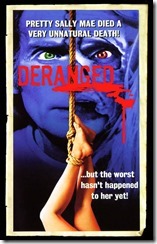
Deranged 1974 movie
MA’S WARNING:

“Remember, Ezra, the wages of sin are syphilis, gonorrhea and death.”             
       Ma Cobb (played by actress Cosette Lee), in the cult horror movie Deranged (1974).
       Ma Cobb is a religious fanatic who teaches her son Ezra to fear and hate women. Ezra overcomes his fear, but not his hate, becoming a serial killer who prefers female victims. But he loves Ma and after she’s dead and buried, he digs her up and brings her corpse home to keep him company. It’s a nice, family-oriented horror flick. (NOT!)

Portrait_of_Carolyn_Wells
THE ERRANT HUSBAND “MAXIOM”:

“The wages of sin is alimony.”
       Carolyn Wells (1862-1942)
       American writer and poet.             
       A line from her book of verse, Folly for the Wise (1904)             
       It comes from a section called “Maxioms,” which includes a litany of humorous twists on old sayings, including:
             “Reward is its own virtue.
              The wages of sin is alimony.
              A penny saved spoils the broth.
              Of two evils, choose the prettier.
             Nonsense makes the heart grow fonder.
             A word to the wise is a dangerous thing.”

Ron Jeffries
THE ERRANT CODE CURSE:

“The wages of sin is debugging.”
       Ron Jeffries
       American software developer and writer
       A saying Jeffries coined that is widely quoted by and well known to computer coding geeks

*     *     *     *     *     *     *     *     *     *

Comments? Corrections? Email me or Post them on the Famous Quotations Facebook page.

Related reading…

April 2, 2018

Can a leopard change his spots?

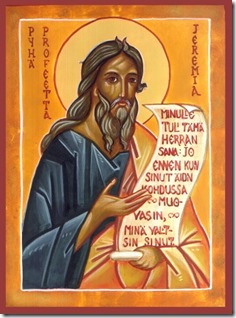
Jeremiah the Biblical Prophet

THE FAMOUS RHETORICAL QUESTION FROM THE BIBLE:

“Can the Ethiopian change his skin, or the leopard his spots?”
      
Jeremiah, 13:23
       This question is posed by the gloomy
prophet Jeremiah in the book of the Bible named for and allegedly written by him. It comes from one of his many long rants (which gave rise to the term jeremiad). In this particular rant, he was warning the people of Judah (Jerusalem) that God was going to destroy them for becoming idolaters and sinners and “scatter them as the stubble that passeth away by the wind of the wilderness.”               
       Jeremiah’s question seems rhetorical on the surface. It’s the source of the proverbial sayings used to imply that people, animals or things cannot change or overcome their basic character or characteristics. One common idiomatic formula is a query based on, but shorter than, Jeremiah’s: “Can a leopard change his spots?” The other popular formulation is an affirmative statement, like “A leopard can’t change its spots.”   
       Jeremiah included an ambiguous twist to his famous question. The full quotation from Chapter 13, Verse 23 is: “Can the Ethiopian change his skin, or the leopard his spots? then may ye also do good, that are accustomed to do evil.”               
       Some Christian commentators have interpreted this verse to mean that hard-core sinners cannot become good people and will not be saved by God; they are doomed to be punished. But others have suggested that, while it may be difficult for a long-standing sinner to change and be saved, Jeremiah was saying it’s not impossible; those who strive hard to embrace the teachings of the Bible and become good can be saved by the grace of God.
       Of course, Jeremiah’s famous quote was recorded in a Biblical text written around 700 B.C. Modern events and science have provided some new information. For example,
Michael Jackson proved that with the help of certain chemical treatments a black man can indeed change his skin color. And, as noted in the book Does a Bear Sh*t in the Woods?: Answers to Rhetorical Questions (2011), scientists who study evolution have determined that, in fact, the patterns of spots on some subspecies of leopards have changed over time. 

James C. Hunter-8x6

THE ‘YOU COULD LOOK IT UP’ COUNTERQUOTE:

“I find many people have deep-seated beliefs that people really cannot change all that much, if at all. Our culture even has clichés to support this lie like ‘A leopard can't change its spots’...If you do not believe that people can really change, I suggest you go to your local library and check out a few of the thousands of books you will find there about how people have changed their lives for good and become something quite different from what they once were.”
       James C. Hunter

       American author and inspirational speaker
      
From Chapter 7 of his book The World's Most Powerful Leadership Principle (2004)

Al Gore angry

AL GORE'S “STUPID QUOTE”:

“A zebra does not change its spots.”
       Attributed to Al Gore
       American politician and environmental activist
       This purported “quote” by Gore shows up in thousands of posts on the internet and various books, such as the popular book The Stupidest Things Ever Said by Politicians (1999), edited by Ross and Kathryn Petras (who provide no source). In many posts it is claimed to be something Gore said while attacking George W. Bush's environmental record in 1992. In a discussion thread on Snopes.com, one person claims it was in the Congressional Record and another cites a 1995 column by Jerry Gladman in the Toronto Sun. I searched various newspaper archives and the Congressional Record and could not find it, except as a quote that is simply attributed to Gore. I've concluded that he probably didn't actually say it. After someone claimed he did and it was included in the popular Stupidest Things book, it took on a life of its own, as faux quotes often do. Gore may have said some stupid things, but I’m skeptical that the zebra “quote” is one of them.

Ben Carson talking

BEN CARSON’S STUPID QUOTE(S):

“For someone to wake up and think that they belong to a different sex because they feel different that day is the same as if you woke up and said, ‘I’m Afghani today’...Can a leopard change its spots? No.”  
       Ben Carson  
       American neurosurgeon-turned-Republican politician    
       From comments he made to reporters in July 2016, explaining why he thinks being transgender doesn’t make sense and apparently doesn’t accept the reality of modern transgender surgery. Some observers think Carson’s notoriously harsh views on transgender and homosexual people and his comment about the leopard are stupid. And, Ben knows about being stupid. As he explained in 2015, “people are not as stupid as [the media] think they are. Many of them are stupid, OK. But I'm talking about overall.” On that much, most of us might agree with him, though opinions vary on about which people are among the “many.” 


Sen_John_W_Daniel-8x6

THE ‘GOD BLESS AMERICA’S BIGOTED INDIAN POLICY’ QUOTE:

“You may change the leopard’s spots, but you will never change the different qualities of races which God has created…The Indian of one hundred and twenty-five years ago is the Indian of to-day—ameliorated, to a certain extent civilized, and yet the wisdom of our forefathers, when, in the Constitution, they set them apart as one people, separate and distinct from the great dominant race which had come to take this land and inhabit it, is indicated in what we are still doing and must forever do with them so long as they maintain their tribal relations and so long as they are Indians.”  
      
John Daniel (1842-1910) 
       Virginia lawyer, author and politician  
       In a February 1899 address to Congress while serving as U.S. Senator for Virginia. Quoted in the book
Shadowing the White Man's Burden: U.S. Imperialism and the Problem of the Color Line (2010) by Gretchen Murphy.

William Shakespeare-8x6[1]

THE SHAKESPEAREAN REPARTEE QUOTE:

King Richard: “Rage must be withstood...lions make leopards tame.”
Thomas Mowbray: “Yea, but not change his spots.”
      
William Shakespeare (1564-1616)
       English playwright and poet 
       Lines
from Act 1, Scene 1 of his play Richard II

        LMFAO - Party Rock Anthem-8x6

THE LMFAO PAR-TEE! LYRICS:

“1-2-3 to the 4
I’m dancin’ with as many super freaks as possible
You can’t change the spots on a leopard
In the club, the homies call me redfoo hefner.” 
       LMFAO 
       American electropop music duo  
       Lyrics from the song
“What Happens At The Party,” on their Party Rock album (2009) 
       Sorry, folks. I only have a dim understanding of WTF these LMFAO lyrics mean. You’ll have to figure them out for yourself.

*     *     *     *     *     *     *     *     *     *     *     *     *     *     *     *

Comments? Corrections? Post them on my quotations Facebook group.

Related reading, listening and viewing…

January 24, 2017

What’s the beginning of wisdom?

God-8x6 
BIBLICAL BEGINNINGS:

“The fear of the LORD is the beginning of wisdom.”  
      
Psalms 111:10    
       The full verse in Psalms 111:10 says: “The fear of the LORD is the beginning of wisdom: a good understanding have all they that do his commandments: his praise endureth for ever.”
       There’s a similar verse in The Book of Proverbs (
Proverbs 1:7): “The fear of the LORD is the beginning of knowledge, but fools despise wisdom and discipline.”
      
Job 28:28 offers this variation: “And unto man he [God] said, Behold, the fear of the LORD, that is wisdom; and to depart from evil is understanding.”

Clarence Darrow-8x6
CLARENCE DARROW’S COUNTERQUOTE:

“The fear of God is not the beginning of wisdom. The fear of God is the death of wisdom. Skepticism and doubt lead to study and investigation, and investigation is the beginning of wisdom. The modern world is the child of doubt and inquiry, as the ancient world was the child of fear and faith.”
      
Clarence Darrow (1857-1938)
       American lawyer, agnostic and free speech advocate
       In his essay
“Why I am an agnostic” (1896) 

Bertrand Russell 2-8x6
BERTRAND RUSSELL’S COUNTERQUOTE:

“Fear is the main source of superstition, and one of the main sources of cruelty.  To conquer fear is the beginning of wisdom, in the pursuit of truth as in the endeavour after a worthy manner of life.” 
      
Bertrand Russell (1872-1970)
       British philosopher, mathematician, atheist and social critic 
       From his essay
“An Outline of Intellectual Rubbish”, included in the book Unpopular Essays (1950)

Thomas Aquinas-8x6
A DEEP THOUGHT FROM THOMAS AQUINAS:

“The beginning of a thing is a part of it. But fear is not a part of wisdom, since fear is in the appetitive power, whereas wisdom is in the intellectual power. Hence it seems that fear is not the beginning of wisdom.”
      
Thomas Aquinas (1225-1274)
       Italian Catholic priest, philosopher and saint 
       In his
Summa Theologica (“Summary of Theology”), written 1265-1274 A.D.

Multicultural Dictionary of Proverbs-8x6
AN OLD GERMAN VARATION:

“To question a wise man is the beginning of wisdom.” 
      
German proverb
       Quoted in
The Multicultural Dictionary of Proverbs (2005) 

George William Foote-8x6
THE MOST OBVIOUS OBSERVATION:

“If the fear of God is not the beginning of wisdom, it is at least the beginning of religion.”
      
George William Foote (1850-1915)
       British writer and social critic
      
“Letters to the Clergy,” published in The Freethinker, Volume 10 (1890)

*     *     *     *     *     *     *     *     *     *

Comments? Corrections? Post them on the Famous Quotations Facebook page.

Related reading…