Showing posts with label Proverbs and Sayings. Show all posts

February 24, 2022

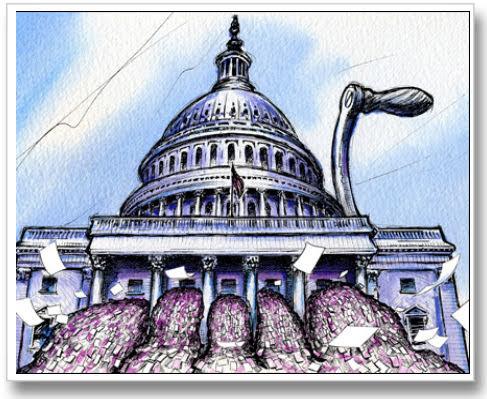
Why laws, iPads, writing and porn are like sausages…


THE FAMOUS SAUSAGE SIMILE:

“Laws are like sausages. It’s better not to see them being made.”
       Traditionally attributed to
Otto von Bismarck (1815-1898)
       German statesman
       Bismarck is
widely credited with this old political saw, sometimes in the form “If you like laws and sausages, you should never watch either one being made.”
       However, as noted by authoritative sources like the
Quote Investigator site, there’s no proof Bismarck ever uttered or penned either variation. It appears to be a famous misquote that has been wrongly attributed to him for decades.
      
Many websites cite a quote by the 19th Century American poet John Godfrey Saxe as a possible origin. In an 1869 lecture, Saxe said: “Laws, like sausages, cease to inspire respect in proportion as we know how they are made.” However, Saxe’s version seems to imply that his audience was already familiar with the basic “laws are like sausages…” formulation.


AN IPAD APPLICATION:

“iPads are like sausages, it is better not to see them being made....We in the West don’t really seem to care that Chinese employees work under awful conditions and die in appalling numbers — unless they make shiny things that we use. We claim we don’t want people to suffer, but in fact we just don’t want our iProducts tainted by that suffering. Isn’t that more than a little hypocritical?”
      
Jon Evans
       Canadian novelist, journalist and software engineer
       Discussing recent revelations about the brutal working conditions of Chinese workers who make iPads and other Apple products,
in his column on the TechCrunch.com site


GEORGE R.R. MARTIN’S VARIATION:

“Writing is like sausage making in my view; you’ll all be happier in the end if you just eat the final product without knowing what’s gone into it.”
      
George R.R. Martin
       American author and screenwriter, known especially for his A Song of Ice and Fire fantasy novels (the basis for HBO’s Game of Thrones series)
       Remark to his fans
in a June 2009 post on his “Not a Blog” blog

                   
THE OFFENSIVE OBSERVATION:

“In defending their work, members of Congress love to repeat a quotation attributed to Otto von Bismarck: ‘If you like laws and sausages, you should never watch either one being made.’...In many ways, that quotation is offensive to sausage makers; their process is better controlled and more predictable.”
       Robert Pear

       American journalist
       In an article he wrote for The New York Times in December 2010


THE PORN VARIATION:

“Sex Pigs: Why Porn is Like Sausage, or the Truth is That – Behind the Scenes – Porn Is Not Very Sexy.”
      
Benjamin Scuglia
       L.A.-based writer and editor of Inside Porn Magazine
       Title of
a widely-cited article he wrote for the Journal of Homosexuality in 2004

*     *     *     *     *     *     *     *     *     *   

Comments? Corrections? Questions? Email me or post them on my Famous Quotations Facebook page.


October 19, 2021

Charity, love and a prenup cover a multitude of sins...


THE FAMOUS BIBLICAL QUOTE:

“And above all things have fervent charity among yourselves: for charity shall cover the multitude of sins.”  
      
Saint Peter (c. 1 BC-c. 67 AD)
       Galilean-born Apostle of Jesus and early Christian leader
       His famous words in
I Peter 4:8, as translated in the King James Bible. Most later version of the Bible use the word love in place of charity.
       Chapter 4, Verse 8 of the
“First Epistle of Peter” (usually referred to as I Peter 4:8) is the origin of the sayings “charity covers a multitude of sins” and “love covers a multitude of sins.” These reflect two different translations of a word originally written in Greek by Peter. Although most familiar Bible quotes are from the King James version, “love covers a multitude of sins” has become the more commonly heard version.
       Peter actually used the Greek word agape for the thing that covers a multitude of sins. In the early Catholic Church’s Vulgate Bible and in the King James Version, agape was translated as charity. In later versions, it was translated as love. But in early Christian theology it didn’t quite mean what we now think of when we use either of those words. Agape refers to a more profound concept that can’t easily be translated into a single English word. It means a feeling of charitable compassion, empathy and non-romantic love toward other people, like the love God and Jesus Christ are said to have for mankind; a higher love that can look past and forgive — and thus “cover” and accept — other people’s faults and transgressions. 
       The famed Bible quote was not intended to mean that if someone gives enough alms to the poor or donates enough money to charities it will atone for or “cover up” their sins and let them get past St. Peter into the Pearly Gates of Heaven. Nonetheless, in common use, variations of the saying “charity covers a multitude of sins” are often used to suggest that doing or having a certain thing will hide or excuse something else.


THE #TRUMPBIBLE VERSION:

“Love covers a multitude of sins. Sure. But you’d be nuts not to get a prenup. I mean, c’mon. #TrumpBible.” 
       Eric Metaxas
       Pastor, author and radio show host
       One of Metaxas's suggested additions to the funny faux Donald Trump quotes featured on the #TrumpBible Twitter page, which mocks Trump’s claim to be a Christian (and Trump in general). Illustration by Jordan Awan.


MOTHER TERESA’S POIGNANT VERSION:

“The conditions under which the leper families live are terrible...Sometimes the pain is so great that I feel as if everything will break. The smile is a big cloak which covers a multitude of pains.”
      
Mother Teresa (1910-1997)
       Albanian-born Catholic nun known for her humanitarian efforts in India
      
In a letter quoted in the book Mother Teresa: Come Be My Light: the Private Writings of the Saint of Calcutta (2007), edited by Brian Kolodiejchuk


OSCAR WILDE’S SOCIALIST VARIATION:

“The proper aim is to try and reconstruct society on such a basis that poverty will be impossible... Charity creates a multitude of sins. There is also this to be said. It is immoral to use private property in order to alleviate the horrible evils that result from the institution of private property. It is both immoral and unfair.”
      
Oscar Wilde (1854-1900)
       Irish playwright, poet, social critic and wit
       In his essay
“The Soul of Man Under Socialism” (1891)


CARL SAGAN’S OBSERVATION:

“The word ‘god’ is used to cover a vast multitude of mutually exclusive ideas. And the distinctions are, I believe in some cases, intentionally fuzzed so that no one will be offended that people are not talking about their god.”
      
Carl Sagan (1934-1996)
       American astronomer, astrophysicist, cosmologist and author 
       Remark in a lecture included in the book
The Varieties of Scientific Experience: A Personal View of the Search for God (2007)


CAPTAIN KIRK’S QUIP:

“That helmet covers a multitude of sins.”
      
Captain James T. Kirk (actor William Shatner) 
       Kirk makes this joking remark
to Spock (Leonard Nimoy) in the Star Trek episode “Patterns of Force” (Season 2, Episode 21). He’s referring to the helmet Spock puts on during their visit to a planet run by a Nazi-inspired government. The helmet covers Spock’s pointed Vulcan ears, thus helping to hide the fact that he is an alien.

*     *     *     *     *     *     *     *     *     *   

Comments? Corrections? Questions? Email me or post them on my Famous Quotations Facebook page.

Related reading and viewing…

August 4, 2021

“The opera ain’t over till the fat lady sings.”


THE FAMOUS SPORTS QUOTATION:

“The opera ain’t over till the fat lady sings.”
      
Dan Cook (1926-2008)
       San Antonio sports journalist and broadcaster
       Cook is widely credited as the person who popularized this saying, though he probably didn’t coin it. According to a June 3, 1978 article in the Washington Post (cited by many sources
), Cook first used it in his regular sports column in the San Antonio Express-News around 1975 or 1976.
       In 1978, he said it during a sports show on San Antonio’s KENS-TV, while discussing the Washington Bullets basketball team. Bullets coach Dick Motta heard Cook say it and started using the line himself when talking about his team’s odds of winning the NBA championship that year. It soon became a popular slogan among Bullets fans. When the Bullets won the championship on July 7, 1978, Motta crowed: “The Fat Lady is singing.” Dan Cook later said that the lady he envisioned was an iconic, hefty female opera singer, the popular image many people have of characters like
Brunnhilde in Richard Wagner’s Götterdämmerung).
       The opera version of the saying may have been inspired by an earlier one used by African-Americans in the southern United States:
“Church ain’t out till the fat lady sings” (a humorous reference to the sometimes plump ladies who sang hymns at church services).


THE TWINKIE OFFENSE:


“The fat lady – the one who apparently ate too many 150-calorie, nutrition-free Twinkies – has sung...Hostess announced early this morning that it would ‘promptly’ liquidate the company immediately and lay off its nearly 19,000 workers. The trigger was a strike this month by members of the Bakery, Confectionery, Tobacco Workers and Grain Millers International Union. ‘We deeply regret the necessity of today's decision," Hostess said in a statement, "but we don't have the financial resources to weather an extended nationwide strike.’”

      
David A. Kaplan 
       American journalist
       In a CNN/Fortune article about the news that Hostess Brands, maker of Wonder Bread, Ding Dongs, Ho Hos, and Twinkies, the “Golden Sponge Cake with Creamy Filling,” was planning to shut down due to financial woes and placing the blame on its union workers.


THE FEDERAL DEBT DEBATE VARIATION:
“It isn’t over until the Tea Party squeals.”
     
Taylor Marsh
 
       Political analyst and blogger 
       A comment in a post
on her blog about the debate over America’s federal debt problem and the reluctance of Republican conservatives to increase taxes as part of the solution.

THE FRENCH BIKE RACE VARIATION:

“[The] Tour de France...has been marred for years by performance-enhancing drug scandals. Forget ‘it ain’t over till the fat lady sings.’ In this event, ‘it ain’t over till the urine-sample lab results come back.’”
       Greg Cote

       Sportswriter for the Miami Herald
       A quip about illegal “doping” by professional bike racers, in a sidebar of his sports column in July 2011


THE JAPANESE BASEBALL VERSION:

“When the game is over, a fat lady will sing to us!” 
       A Japanese interpreter’s translation of the famed saying, as shown in subtitles, in the movie
Mr. Baseball (1992)


THE LAST RITES VERSION:

“It ain’t over till the fat priest reads extreme unction over your almost corpse. Oh, I forgot, the correct term has been changed from ‘extreme unction.’ Now it has been watered down to something like ‘anointing of the sick.’ God forbid that anyone might imply that the poor soul might actually be dying.”
      
David Skibbins
       American novelist and psychotherapist 
       Lines spoken by a character in Skibbins’ mystery novel The Hanged Man (2008)
       The quip refers to the Vatican II edicts issued by Pope Paul VI in 1965, which changed the name of the last rites Catholic priests give to dying people from the traditional phrase “Extreme Unction” to the nicer-sounding modern version,
“Sacrament of the Anointing of the Sick.”

*     *     *     *     *     *     *     *     *     *

Comments? Corrections? Questions? Email me or post them on my Famous Quotations Facebook page.

Related reading…

June 13, 2021

“Inside every fat man there is a thin man trying to get out.”


CYRIL’S PRECURSOR TO THE FAMOUS SAYING:

“Imprisoned in every fat man a thin one is wildly signalling to be let out.”
       Cyril Connolly (1903-1974)
       English writer, editor and critic 
       An oft-cited line from Connolly’s book The Unquiet Grave, pt. 2 (first published in 1944) 
       Cyril Connolly
is frequently credited as the originator of the modern proverbial saying “Inside every fat man there is a thin man trying to get out,” also heard with the ending “…struggling to get out.” Some sources trace it to an earlier quote by English author George Orwell. In fact, neither of the commonly-used versions of the quip are what Connolly or Orwell actually wrote.  
       Connolly’s line in his book of essays The Unquiet Grave is: “Imprisoned in every fat man a thin one is wildly signalling to be let out.”
       Orwell’s earlier quote mentions the idea of a thin man inside a fat one, but says nothing about the thin man signaling (to use the modern American spelling) or
struggling to get out. In his 1939 novel Coming Up For Air the central character, George Bowling, says: “I’m fat, but I’m thin inside. Has it ever struck you that there’s a thin man inside every fat man, just as they say there’s a statue inside every block of stone?”


KINGSLEY’S COROLLARY:

“Outside every fat man there was an even fatter man trying to close in.” 
       Kingsley Amis (1922-1995)
       English novelist, critic and poet
       In his novel One Fat Englishman (1963)


THE BELLY WISDOM THEOREM:

“The old saying is wrong: It’s not that ‘Inside every fat woman there's a thin woman screaming to get out.’ The reality is that inside EVERY woman, there's a FAT woman trying to get out and breathe, relax her belly center, undo her pants, let her thighs roar with thunder, and her breasts feel the breeze!”
       Bell Pine Art Farm
       From the company’s description of its “Belly Wisdom” statuette


THE RUPAUL RULE:

“Inside every gay man, there is a big, soulful, divalicious black woman vying to get out.”
       From a post on The Way I See It Theatre Blog (Aug. 26, 2011)


THE NATIONAL LAMPOON LETTER:

“Sirs: Outside every thin Canadian, there's a fat American, screaming to get in.”
       A letter to the editor published in National Lampoon, June 1964, attributed to Canadian reader Chris Kelly, but probably written by the editors


THE OLD AGE AXIOM:

“Inside every old person is a young person wondering what the hell happened.”
       Modern proverbial saying and t-shirt slogan, sometimes attributed to American gospel singer Cora Harvey Armstrong and sometimes to the British fantasy and science fiction novelist Terry Pratchett.

*     *     *     *     *     *     *     *     *     *

Comments? Corrections? Questions? Email me or post them on my Famous Quotations Facebook page.

Related reading…

May 30, 2020

“If it ain’t broke, don’t fix it” from Bert Lance and basketball to Burger King and Dilbert – and beyond…


THE PROVERBIAL AXIOM:

“If it ain’t broke, don’t fix it.”
      
Bert Lance (1931-2013)
       American banker and political advisor to President Jimmy Carter
       This was
already a proverbial saying in the Southern U.S. and maybe elsewhere before Lance adopted it as one of his own favorite quips. But Lance is widely credited with popularizing the saying and making it a national catchphrase. It’s a pithy way of expressing the belief that if some thing or policy is working adequately, it makes no sense — and may be unwise — to try to change or improve it. Lance was a top advisor to Jimmy Carter during the 1976 presidential campaign and served as Carter’s Director of the Office of Management and Budget from January 1977 until he was forced to resign in September 1977, due to allegations of past banking improprieties. During that time, Lance’s use of the “If it ain’t broke…” saying was quoted in many news stories and articles and is still cited in many books about politics and quotations.

                       
JOHN WALL’S VIEW:          

“I understand how quickly this game can be taken away from you. I try to play through all injuries, because I feel like, ‘If it ain’t broke, go play.’ For me, if you take all the money away, I’m still going to play the game the same way I do, because that's how much I love it.”
        John Wall
        Washington Wizards basketball team point guard
        In an interview on May 27, 2020, commenting on his desire to get to playing basketball after being sidelined for nearly two years by surgeries for bone spurs and a tear in his Achilles tendon.

                       
THE BURGER KING EXAMPLE:

“If it ain’t broke, don’t fix it! Right? Well, Burger King didn’t get the memo. They’ve decided to flip their 40-year-old slogan. The days of ‘Have It Your Way’ will soon be a thing of the past. Their new slogan ‘Be Your Way’ kicks off this month. What the heck does that even mean?”
       A May 23, 2014 article on NewsFixNow.com about the fast food chain’s puzzling new advertising slogan


ADVICE FOR REAL WORLD DILBERTS:

“Remember: ‘If it ain’t broke, don’t fix it!" But if it is ‘broke’ or if the current operation is not optimum, make changes and additions for an improved operation that complies with ISO 9000 standards.”
       Quoted
in The American Society for Quality Control’s 49th Annual Quality Congress Proceedings (1995)

                       
THE “MIRACLE ON THE HUDSON” VERSION:

“If it is broke, you’ve got nothing to lose from trying.”
      
William Langewiesche
       American journalist and book author 
       In his book Fly by Wire: The Geese, the Glide, the Miracle on the Hudson (2009)
      
Langewiesche cited this as the philosophy adopted by pilot Chesley “Sully” Sullenberger and first officer Jeffrey Skiles, who saved the lives of 155 passengers and crew members by successfully “landing” U.S. Airways flight 1549 on the Hudson River on January 15, 2009 after it was disabled in a collision with flying geese.

                       
THE SUSTAINABLE LIFESTYLE VERSION:

“There are still many, many people who aren’t willing to listen to mounting evidence about environmental dysfunction. Their mantra is, ‘If it ain’t broke, don’t fix it,’ but mine is, ‘If it ain’t fixable, don’t break it.’”
      
David Wann
       American author, filmmaker and advocate of “sustainable lifestyles”              
      
In his book Simple Prosperity: Finding Real Wealth in a Sustainable Lifestyle (2007)

                       
ADVICE FOR HUSBANDS WILLING TO RISK THEIR WIFE’S WRATH:

“If it ain’t broke don’t fix it and if it is broke wiggle your way out of fixing it.”
      
Quoted in the book Never Hang Wallpaper With Your Wife (2006) 
       A guide to “decorating and renovating from a guy’s point of view,” written by William S. Peckham and Michael C. Hammar

*     *     *     *     *     *     *     *     *     *

Comments? Corrections? Questions? Email me or post them on my Famous Quotations Facebook page.

Related reading: books of quotations about politics and government…

January 12, 2020

“Suppose they gave a war and nobody came.”


THE ORIGINAL INSPIRATION FOR THE SIXTIES SLOGAN:

“Sometime they’ll give a war and nobody will come.”
      
Carl Sandburg (1878-1967)
       American poet and writer
       A line from Sandburg’s epic prose poem The People, Yes (1936)
       In the 1960s, several variations of an anti-war slogan began appearing on posters, in print and in songs. The version that became most common (as shown by the
comparatively huge number of Google hits it gets) is “Suppose they gave a war and nobody came.” Other variations include “Suppose they gave a war and no one came” and “What if they gave a war and nobody came.” It’s not certain who coined the most familiar version, but this much is clear: all of the various iterations of the saying are ultimately descended from a line in Carl Sandburg’s book-length ode to America and it’s citizens, The People, Yes, first published in 1936.
       In the poem, the line is said by a little girl who sees a group of soldiers marching in a parade. It’s from a part of the poem in which Sandburg seems to foresee the potential devastation of a second and possibly a third world war:
       “
The first world war came and its cost was laid on the people.
       The second world war — the third — what will be the cost.
       And will it repay the people for what they pay?...
       The little girl saw her first troop parade and asked, 
       ‘What are those?’
       ‘Soldiers.’
       ‘What are soldiers?’
       ‘They are for war. They fight and each tries to kill as many of the other side as he can.’
       The girl held still and studied. 
       ‘Do you know ... I know something?’
       ‘Yes, what is it you know?’
       ‘Sometime they’ll give a war and nobody will come.’


THE EVOLUTION OF THE SIXTIES SLOGAN:

“Suppose they gave a war and nobody came.” 
       Possibly coined by
James R. Newman 
       American mathematician, writer and editor of Scientific American magazine
 
       In the 1960s, several updated versions of Carl Sandburg’s line became popular. They were often used in the context of opposition to the Vietnam War. The most common version, “Suppose they gave a war and nobody came,” was used as a slogan on posters that were sold in Hippie shops in the late Sixties (like the blacklight poster shown at left). It was also used as the title of
a comedy movie in 1970, giving it even broader recognition. Some posts on the Internet claim the now familiar words were first written by Bertolt Brecht in the 1930s. However, they give no source and I couldn’t find one, so I deem that claim doubtful. (As Abraham Lincoln said, “The problem with Internet quotations is that many are not genuine.”) 
       In contrast, the origin of the variation “Suppose They Gave a War and No One Came” is well documented. It was used as
the title of a widely-read article written by the American poet and author Charlotte E. Keyes (1914-1980). The article, about her growing admiration for the anti-war activism of her son Gene, was published in the October 1966 issue of McCall’s magazine. Charlotte’s other son happens to be the quote and phrase maven Ralph Keyes. He noted in his excellent book The Quote Verifier (2006) that his mother saw the phrase “Suppose they gave a war and nobody came” in a 1961 letter to the editor in The Washington Post, written by James R. Newman. Newman was referencing, but apparently misremembering, Sandburg’s line. Charlotte cut out and kept the letter for future reference and later adapted the title of her article from it. Newman may or may not have coined “Suppose they gave a war and nobody came.” That paraphrase of Sandburg may already have been floating around at the time. However, I found no use of those words dated earlier than Newman’s 1961 letter in any newspaper archive or anywhere else online. So, he may deserve credit for creating the Sixties slogan (though perhaps inadvertently.) 
       Another variation, “What If They Gave a War and No One Came,” surfaced in 1968 as the title of a song by the now forgotten "Symphonopop" composer and musician
Jonna Gault. And, in 1972, poet Allen Ginsberg echoed her version in his 1972 poem “Graffiti,” which included the lines “What if someone gave a war & Nobody came? / Life would ring the bells of Ecstasy and Forever be Itself again.”


A VARIATION ABOUT A DONALD TRUMP DEBATE NOBODY REMEMBERS:

“What if they gave a debate and nobody came?”
       Brad Knickerbocker
       Staff writer and editor for the Christian Science Monitor 
       His humorous question
in an article about the December 2011 Republican “debate” hosted by Donald Trump, which all but two Republican presidential candidates declined to participate in. (Newt Gingrich and Rick Santorum were the only candidates who agreed to appear.)


THE VIAGRA VARIATION:

“What if You Took Viagra and Nobody Came?” 
       Double entendre title of
an article in the Jan.-Feb. 1999 issue of Mother Jones magazine
       The tongue-in-cheek article discussed some non-drug alternatives to Viagra, such as an artificial nylon-polypropylene penis, penile implant surgery — or a Corvette.

*     *     *     *     *     *     *     *     *     *

Comments? Corrections? Post them on the Famous Quotations Facebook page.

Related reading…